The IRS Extended the Deadline

You have probably heard by now that the IRS has extended the deadline to both file and pay your 2019 taxes until July 15, 2020.  Read all about the Service’s COVID-19 relief plans here.

So, what does this mean?

This means that the calendar for payments and other deadline-related items has shifted a bit.  The obvious change is the extra time to both file your 2019 tax return (Form 1040 et al) and pay the balance due without penalty on July 15th, 2020 (but see “The Fine Print” below).  However, this affects a few other things I see in my practice:

1.  Estimated tax payments for 2020

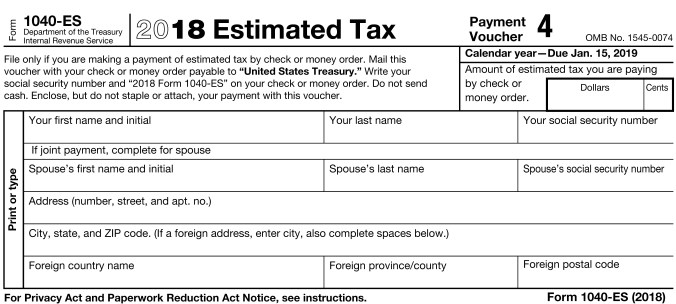
The timeline for making estimated tax payments (Form 1040-ES) for 2020 tax has shifted a bit…and it’s a little wonky.  Here it is…

  • 1st quarter 2020 is now due on July 15th, 2020
  • 2nd quarter 2020 is still due on June 15th, 2020 (unchanged – please note that this is BEFORE 1st quarter is due)
  • 3rd quarter 2020 is still due on September 15th, 2020 (unchanged)
  • 4th quarter 2020 is still due on January 15, 2021 (unchanged)

So, if you pay quarterly, don’t miss that first payment for 2nd quarter, due June 15th, which is due before the payment for 1st quarter, due July 15th.  Not confusing.  Not at all.

2.  IRA (Traditional or Roth) and HSA contributions for 2019 tax year

The deadline for these contributions has also been extended until July 15th, 2020.

3.  SEP employer-portion contributions for 2019 tax year

The deadline for these contributions has also been extended until July 15th, 2020.  However, this contribution deadline can be extended further until October 15th, 2020, by filing a valid extension for your tax return.

4.  Tax return extension

You can request an additional 3 months time (until October 15th, 2020) to prepare and submit your completed 2019 tax return.  The deadline to file this extension is now July 15th, 2020.  However, if you anticipate a balance due, it must be paid no later than July 15th to avoid a possible penalty and interest.

So, what do I do?

Well, now would be an excellent time to gather your tax data and submit it to your tax preparer (or prepare your own return, if you’re into that).  If you file quarterly estimated payments, you should try to get your return completed before the June 15th 2nd quarter payment due date.  And, finally, refunds will still be issued within a few weeks of filing your return, so there’s no change there.

You could also send a little thank you note to the IRS Commissioner, Charles P. Rettig.  I’m sure he would love to hear from you.

The Fine Print:  The IRS has postponed the deadline for the “failure to pay” penalty.  If you did not satisfy the requirements of the “safe-harbor” for estimated tax during 2019, it is possible that you may owe an “underpayment” penalty for 2019 tax.  Consult your tax advisor.

Second Quarter 2019 Estimated Tax Payments Due June 17th!

Greetings gentle taxpayers!

If you are not subject to (enough) withholding due to significant self-employment or investment income, you must make quarterly estimated tax payments.  The next one is due Monday, June 17th, 2019.  This payment is must cover estimated tax for the second quarter of 2019 (April-June).  However, if you underpaid (or skipped) the first quarter payment, you need to make up any shortfall from first quarter along with your second quarter payment.  In other words, this second quarter payment plus whatever you paid for first quarter (at April 15th) must equal 50% of your total estimated tax for the year.

Click here to go to the Form 1040-ES forms and instructions.  On pages 3 and 4 you will find a list of the available payment methods.  (Fun fact: the IRS cannot accept a check, personal or cashier’s, for $100 million or more.)  Page 5 has the mailing address information if you pay by sending a check and 1040-ES voucher.  Finally, the second quarter 2019 1040-ES voucher is on page 11.

If you choose to file by mailing in your voucher and a check, be sure you mail it on or before June 17th.  I strongly recommend using certified mail to document the postmark date.

And, oh yeah, have a great summer!

IRS Notices: Do’s and Don’t’s

You got your mail and, nestled in between the Val-Pak and the grocery circular, there is a letter addressed to you from the Internal Revenue Service.  As you break into a cold sweat, the world starts to get kinda fuzzy…

IRS Logo

What should you do?!?

First, you should remember to breathe.  The next thing you should do is open it.  Read it.  Make sure the name and social security number match yours.  Try to assess why they are writing you.  Find the tax return or filing referenced and compare the IRS notice to your records.  Call your tax preparer or adviser to discuss the issue at hand and what action should be taken.*  While there are occasional exceptions, the vast majority of IRS notices will require a response in a timely manner.

What NOT to do…

Ignore it.  Hope it will go away.  Procrastinate dealing with it.  As I said above, most notices require a response.  Ignoring one IRS notice will generally cause another follow-up IRS notice.  This second notice (or third or…) is usually not as pleasant as the first one, so you don’t want to let it get to that point.

IRS Logo

Other fun info about IRS notices…

You can get IRS notices for many different reasons.  Most of the time (like 95%+ in my experience) you can resolve the issue by responding with a letter and perhaps attaching some documentation to back up your position.  There are a few, though, that require serious attention:

  • If you are delinquent with your tax return, and the IRS is notifying you that they plan to prepare your return for you.  Even though this might seem like a great idea – FREE TAX PREP SERVICES! WHO KNEW?!? – it is really not something you want.  The IRS will prepare your return such that you owe the maximum amount you could possibly owe given your income.  They will take no deductions other than the standard deduction and give the IRS the benefit of every doubt.  If you get this notice, you must act immediately to make contact with the IRS and get your tax return prepared and submitted.
  • If you receive a notice saying the IRS is assessing additional tax plus penalties and interest due to an incorrectly reported W-2 or 1099.  This happens more that you would believe.  Decimal points can elude the IRS’s scanning software and cause them to think your $750 1099-MISC is an ostensibly unreported $75,000 1099-MISC.  Clearly this is an error, but it can generate a huge tax headache if not handled promptly…which leads me to…
  • If you receive a notice saying the IRS is going to levy your bank account.  If you get this notice, you have probably already seen (and likely ignored) a few previous IRS notices.  This is never the first notice.  While the IRS has the authority to levy your assets or garnish wages, it is not their first course of action.  But, by the time it gets to this point, you may find that it is more difficult (and more expensive) to resolve.
  • Finally, if you receive a notice that your tax returns are under audit.  With this notice, I would seek representation (your tax preparer, usually, or a CPA or attorney if you prepared the return yourself) to assist in preparing for an audit.  But, as with all the other notices, you (and/or your representative) must respond in a timely manner.


IRS impersonators

While I want to stress that legitimate IRS notices should never be ignored, there are a lot of scams out there that should be either ignored (at the very least) or reported to the authorities (better).  The IRS will never make initial contact with you by telephone or email, and will never ever contact you on social media.  The IRS will not send you written correspondence asking you to verify personal information like your social security number (because they’ve got that), bank account number (they’ve already got that too), or PIN# (they don’t need that).  The IRS will not demand that you pay an assessment immediately or risk arrest/deportation/suspension of business license.  The IRS will not request payment in the form of prepaid cards or cash.  In short, if you get a robocall saying you’ve “done a fraud with IRS” and they are going to come arrest you if you don’t send them $500 in prepaid Starbucks gift cards, it’s a scammer.**

Final disclaimer

I write this as a sort of general public service/informational/entertainment-only posting.  It is not meant to cover all types of IRS correspondence, nor should it serve as a substitute for advice from a tax professional.  If you receive any notice or other correspondence from the IRS, please consult your tax adviser.

Best wishes that your Val-Pak and grocery circular come to your mailbox free of IRS notices!


* Call your tax adviser, but please remain calm.  If you are so hysterical that I can’t understand anything other than “OMG I’m going to prison!” I am going to wonder if I need to show up somewhere with bail.  It takes a whole lot of IRS notices and trips through courtrooms before prison becomes a legitimate concern.
** I get these calls all the time.  They are kind of hilarious, actually.  It’s like Siri or Alexa reading a script obviously written by some translation software.

The end of 2017

Greetings, gentle taxpayers!

I know most people think 2017 ended when the clock struck midnight on December 31st.  However, for tax preparers, the year doesn’t end until the clock strikes midnight on October 15th, the final deadline for extended tax returns.  It can now be 2018 for me.

Of course, as of this writing, there are only 76 sunsets left in (the calendar year) 2018.  The new tax laws going into effect for the 2018 tax year will be a learning experience for all of us (me included, though I probably have a head start).  But some year-end things never change:

-Pay any last minute or end of year Schedule C/freelance business expenses

-Gather up your receipts and do some advance organization

-Consider selling stocks in loss positions

-Save up for 4th quarter estimated payment (1040-ES) due January 15th, 2019 (if applicable)

-Check your year-to-date federal tax withholding (or contact me to do this) to be sure you are on track

-If you prepare Forms 1099-MISC for independent contractors you hire, get updated Forms W-9

Finally, if you filed a little on the late side and are curious about your refund status, please take a look at my blog post “Where’s my refund?!?”.  It may sound a little cranky, but it will show you how to find out when your refund is slated to be direct deposited.

And now, we slide right on out of 2018…

The ACA is Still the Law (as of November 7, 2017)

Despite Congress’s efforts, neither a repeal of the Affordable Care Act (“Obamacare” or “the ACA”) nor a tax reform bill have made it into law.  As such, the individual insurance mandate is still in effect for the 2017 tax year.  On the 2016 tax returns, the IRS gave us the option leave blank the answer to the healthcare coverage question.  This put the onus on the IRS to come after taxpayers to enforce assessment and payment of the ACA mandate penalty.  However, for the 2017 year, the IRS has stated that it will no longer accept tax returns that have left the healthcare question blank.  So, if you do not have healthcare coverage and don’t have an acceptable exemption from the penalty, I will have no choice but to answer the healthcare coverage question “no” and calculate the penalty.

Here is a link to the IRS’s summary of the healthcare law and how it affects most taxpayers.  I’ve boiled down most of the highlights:

  • If you have health insurance through your employer, they will likely issue you a Form 1095-C.  Add this to your tax data and give it to me when we do your tax return.  No further information is generally required.
  • If you purchased insurance through the individual market (not on the Healthcare Marketplace Exchanges), you should receive a Form 1095-B.  I will need this form and a summary of the health insurance premiums you paid out of pocket.
  • If you purchased insurance through the Healthcare Marketplace Exchange (www.healthcare.gov), you should receive a Form 1095-A.  I will need this form, but no further information is generally required.
  • If you are claiming a health coverage exemption issued by a religious health-sharing provider or you have an Exemption Certificate Number issued by the Marketplace, please include applicable documents with your tax data.

Some of you may be wondering about these health coverage exemptions.  Here is a link to the Marketplace’s 2017 health coverage exemptions and how to apply for them, and here is a link to the IRS’s tool to help you determine if you are eligible for a health coverage exemption.  If you think you may be eligible for an exemption, please visit both of those sites.  Print out the results and include them with your tax data so we can make sure we report it correctly.

Finally, a reminder that open enrollment for 2018 coverage on the Healthcare Marketplace ends December 15, 2017.  Since my crystal ball is on the fritz, I have to advise based on the laws currently in effect.  So, my advice is to enroll in a health insurance plan now to avoid a penalty on the 2018 tax return!


Let’s Talk 1099s

If you use independent contractors (service providers who are not your employees) in your business, you may be required to file Forms 1099-MISC and the related Form 1096.  This is a form that you don’t want to miss because the IRS penalties for late filing or failure to file are a serious bummer.

Here is a link to the Form 1099 instructions, but these are the general rules for most small business owners and sole proprietors:

  • The Form 1099-MISC/Form 1096 filing deadline is January 31, 2018.  This is both to distribute forms to nonemployee compensation recipients AND to file with the IRS.
  • Prepare a Form 1099-MISC for any nonemployee compensation recipient paid $600 or more during 2017.
  • Nonemployee compensation paid to independent contractors is reported in Box 7 of Form 1099-MISC.
  • Form 1099-MISCs generally are not required to be issued to service providers that are organized as corporations (both Subchapter C and S).*
  • For Form 1099-MISC filing using paper forms, the original forms suitable for filing with the IRS must be purchased.**  They can be ordered online or purchased at an office supply store.  (Pro tip: spring for the 1099 envelopes too.  Makes life easier and looks a lot more professional than plain envelopes.)
  • If you pay independent contractors, be sure to have them fill out a Form W-9 so you have their tax identification number and updated address information.  Keep this Form W-9 in your files so it is available should the IRS ever want to see it.
  • If you are a sole proprietor, I strongly recommend that you obtain an employer identification number.  You can apply for one online here.  This keeps your social security number from being distributed with every Form 1099-MISC.

It’s not too early to start thinking about this.  January is right around the corner!


*Attorney fees over $600 must be reported on Form 1099-MISC even if the legal provider is organized as a C or S Corporation.  Use Box 7.

**Unfortunately, the sample Forms 1099-MISC/Form 1096 on the IRS.gov website are not suitable for filing, and can trigger a penalty if submitted to the IRS.


Busy Season Wrap-Up

It’s now the evening of April 17th and I am pretty much done with tax busy season.  I even did my own extension.  I always forget that I am also a taxpayer and have this irritating tax filing obligation.  All I have left now are a few stragglers who haven’t returned a Form 8878 or 8879, the “permission slip” I need from my client before I can efile.  Unfortunately, this year I did not reach my goal of filing all my clients’ returns timely.  I had to file about 15 extensions, though the vast majority of them are mostly done and/or need to go through final review.  This year, many of my clients weren’t ready with their tax data until late March (or even early April).  When this happens, it puts me in a real bind because taxes aren’t the only one of my jobs that go into busy season in the spring.  I have 22 violin and viola students that need to be taught, opera starts up again, and Easter (and other) gigs roll in.  I simply run out of time.  When we have a 20 hour opera week, and I have to teach or deal with student issues for about 20 hours, that’s 40 hours before I touch a tax return.  I had a few weeks in March that were close to 60 hours before I even picked up a tax return.  Given the number of tax returns I have to prepare and the average number of hours for each return, I need about 120 hours to complete all these returns.  If I only have about five weeks to do all the returns (seriously I didn’t even get the first couple until the first week of March), that’s over 20 hours a week.  There aren’t enough hours in the day or enough brain cells in my head.  I finished as many as I could and had to get a little more time for the rest.

During tax season, I find it interesting how my clients react when I tell them they owe tax or they have a refund.  Some people completely freak out if I tell them they owe a certain amount (that’s so much!), while others are happy to owe the same (is that all?).  I have some who will never be happy with anything I tell them.  Any amount to owe is too much, and any amount to get back is either not enough or they resent having paid in too much.  I have to remind myself that I am only the messenger, and it is generally not my fault that anybody owes tax.

Now, I’m looking forward to the summer.  I leave town eight weeks from now.  That means I’ve got about seven weeks to get all these tax returns wrapped up.  The good news is that my other jobs start to lighten up in May, so I should finally have uninterrupted time to get some work done.  The bad news is that I probably won’t get much of a break until I cross the state line.